Money records3 min read
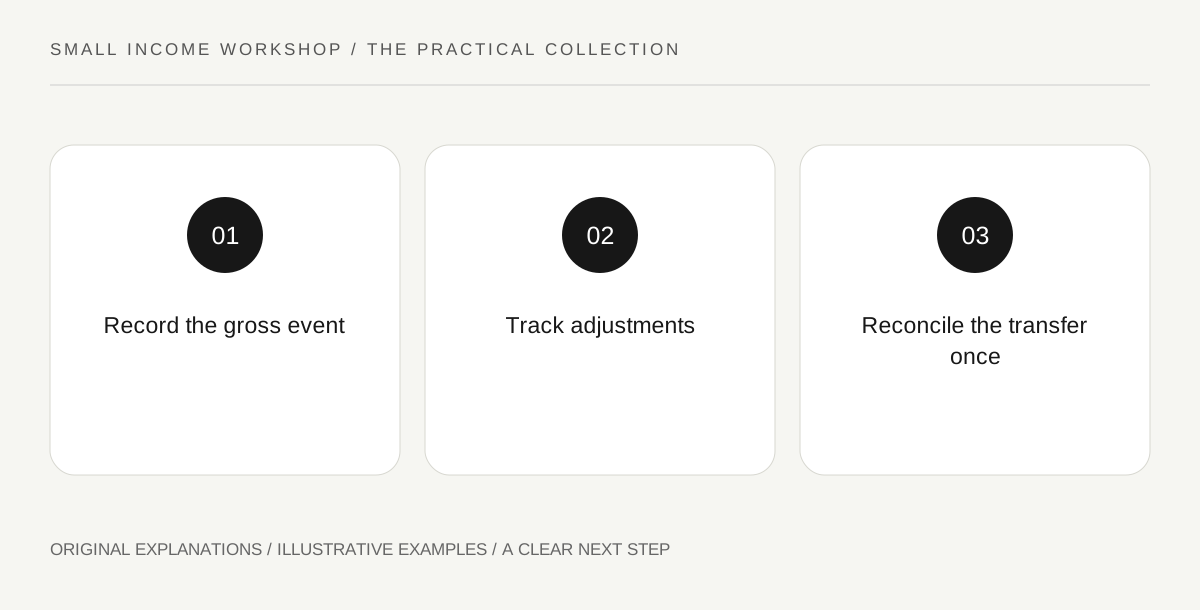
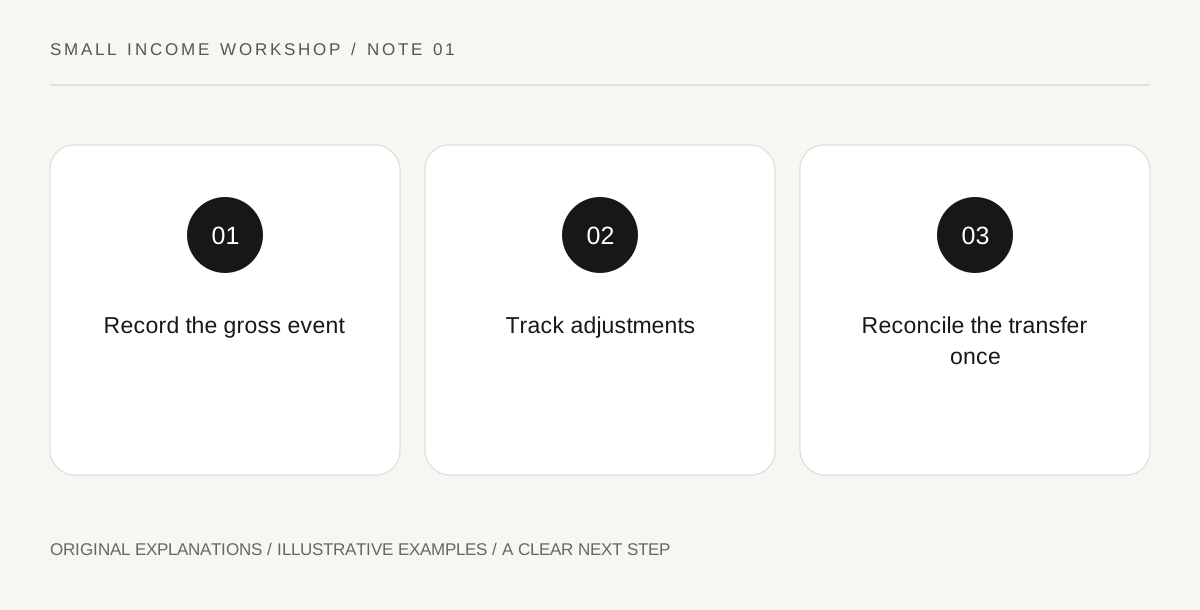
A platform can celebrate a sale before fees, refunds or other costs are visible. Build a small record that follows the amount through each stage. The purpose is to understand what happened to a real transaction, without turning the largest displayed number into a claim about spendable profit.
Read the guide ↗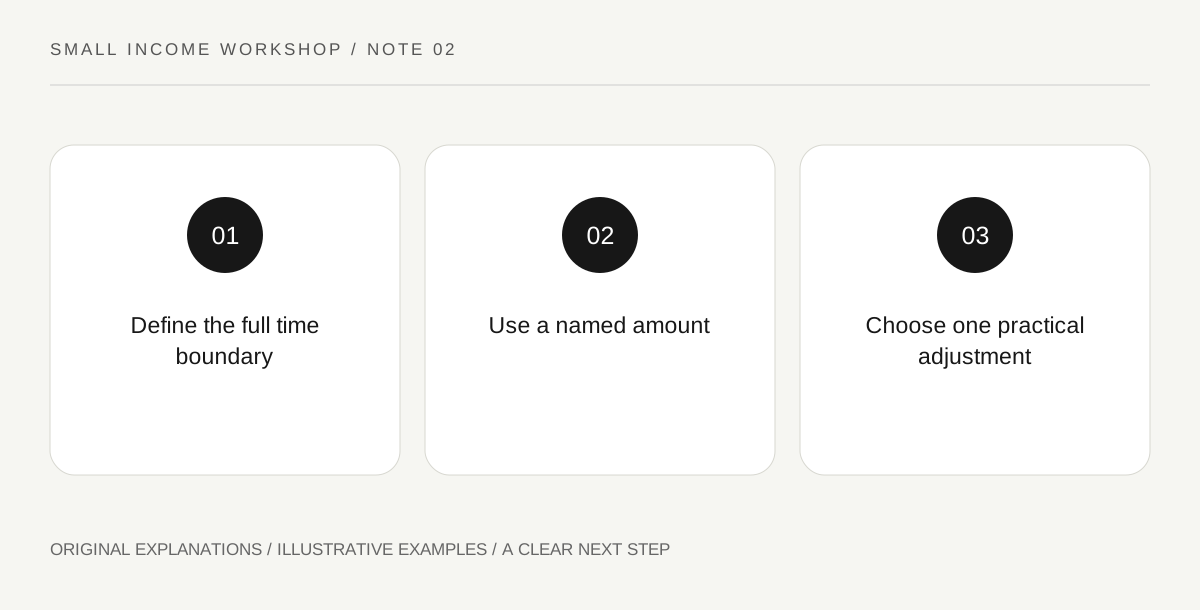
Time and capacity3 min read
A short paid task can require preparation, messages, checking and administration that never appear in the advertised completion time. Track those stages before calculating an operational hourly result. The number is a description of an observed or clearly fictional scenario, not a promise that others can earn the same rate.
Read the guide ↗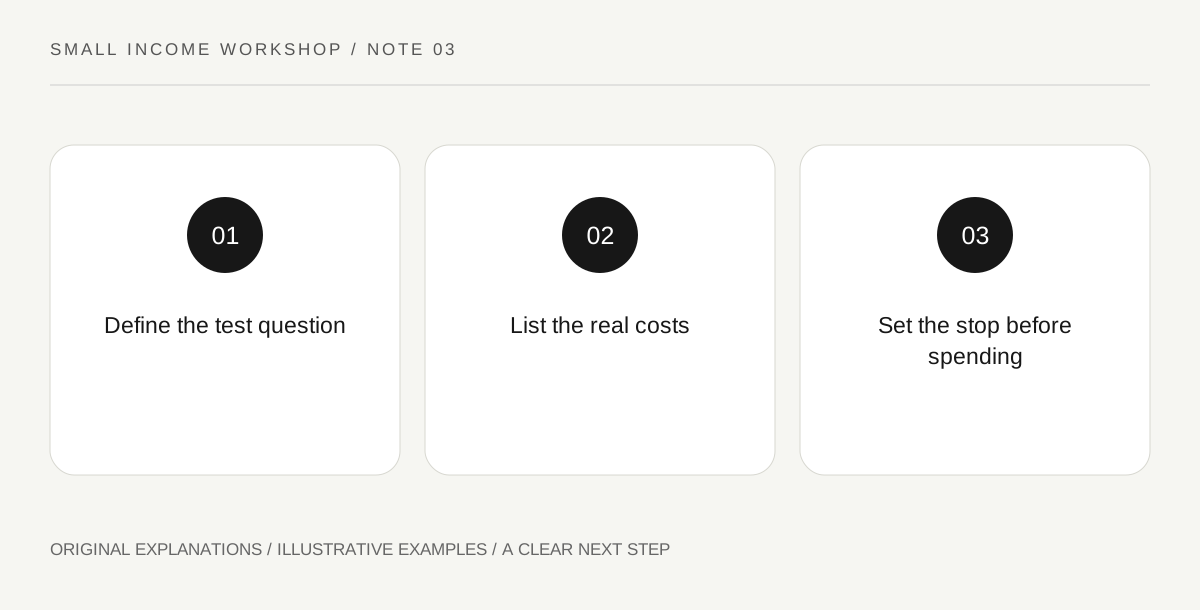
Work experiments3 min read
A modest side project can accumulate subscriptions, equipment and training before it produces a useful result. Set a bounded experiment and a spending ceiling first. Separate what is essential to test the idea from purchases that merely make the activity feel more established.
Read the guide ↗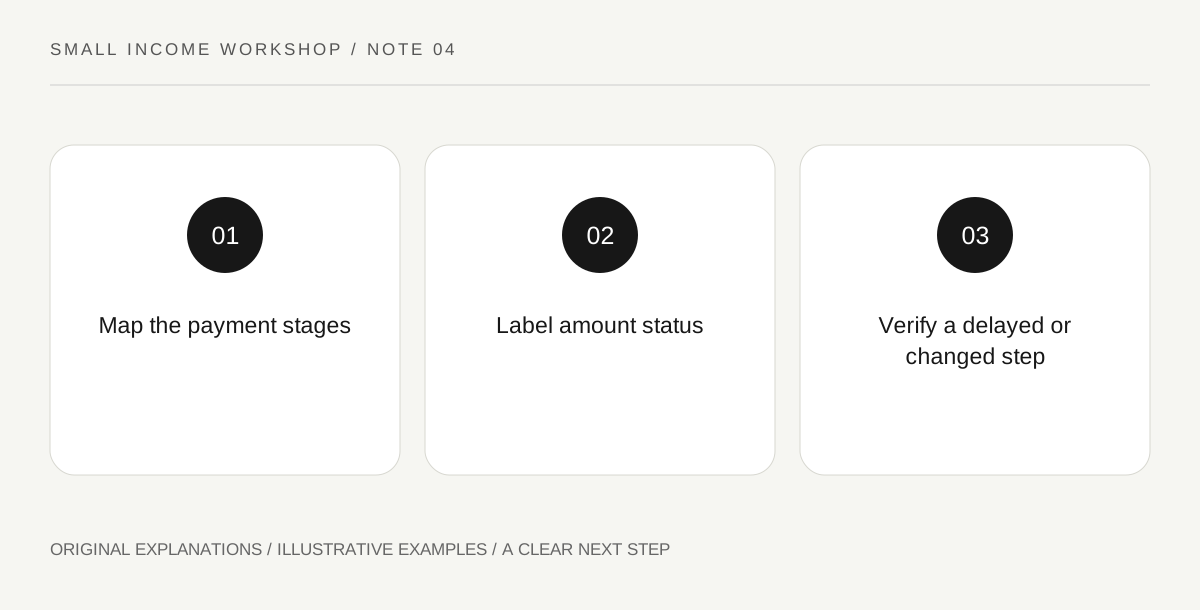
Money records3 min read
Work completion, platform approval and money arriving in an account can happen on different dates. Keep those states separate before planning around the payment. A clear calendar helps manage the activity's timing without treating a projected payout as cash already available or advising someone to borrow against an uncertain transfer.
Read the guide ↗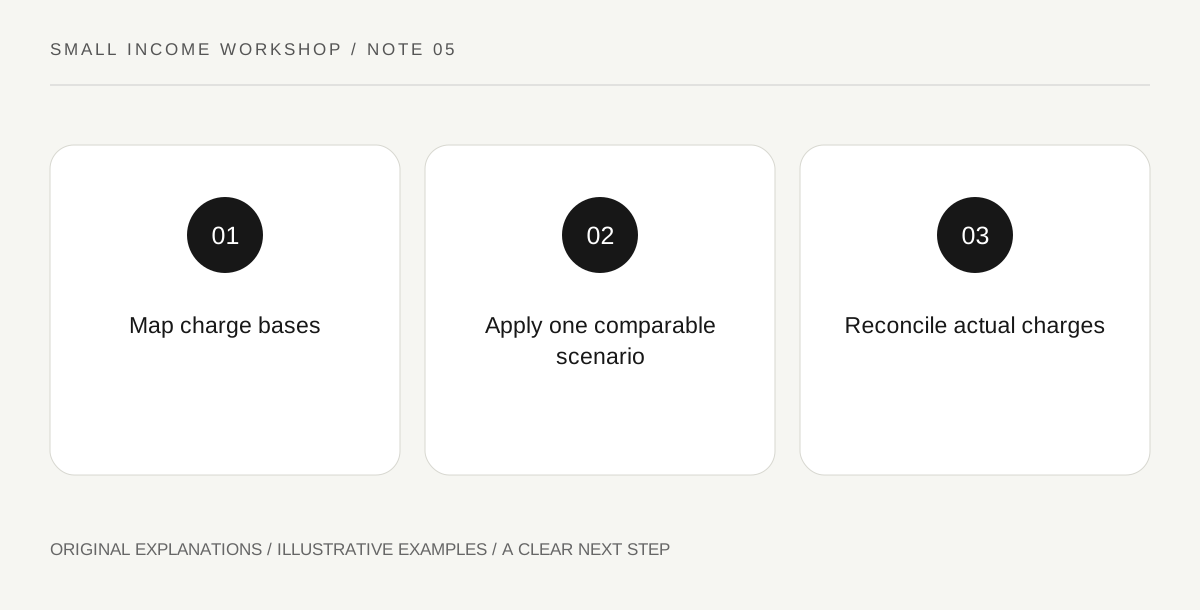
Opportunity reading3 min read
Two platforms can advertise different fee percentages while charging for different actions. Read the base, timing and additional charges before comparing them. Use the same clearly labeled transaction scenario so a small-looking percentage does not hide a different total or an ongoing commitment.
Read the guide ↗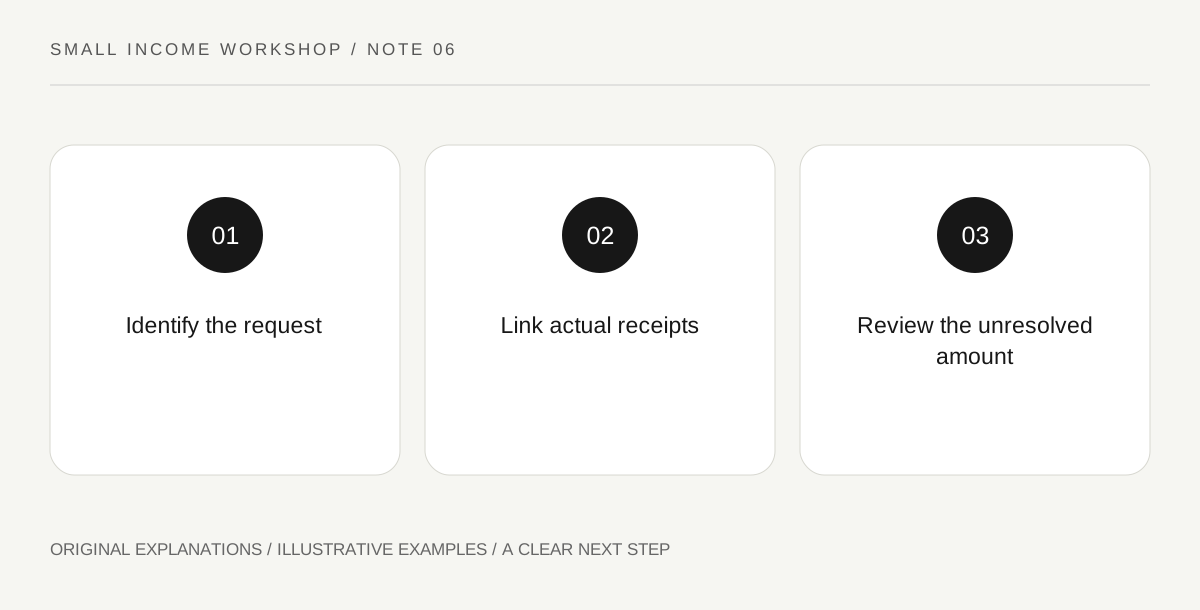
Money records3 min read
Issuing an invoice creates a payment request, while receipt of money is another event. Keep both visible in a small register, with any correction or partial payment linked clearly. This management record helps explain the work's cash movement without deciding the tax treatment or legal status of every arrangement.
Read the guide ↗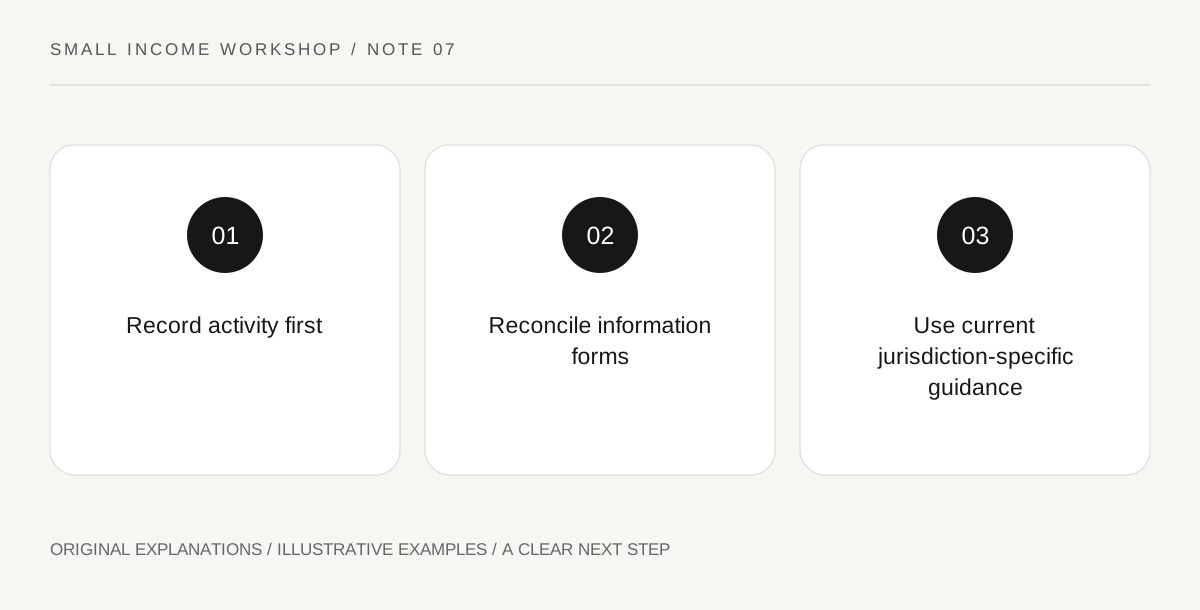
Money records3 min read
A small online-work activity can create income questions even when no tax information form appears in the account. Keep the underlying transaction records first and use the relevant current authority's guidance. This note explains that distinction with US resources, without supplying a universal filing threshold or individualized tax instruction.
Read the guide ↗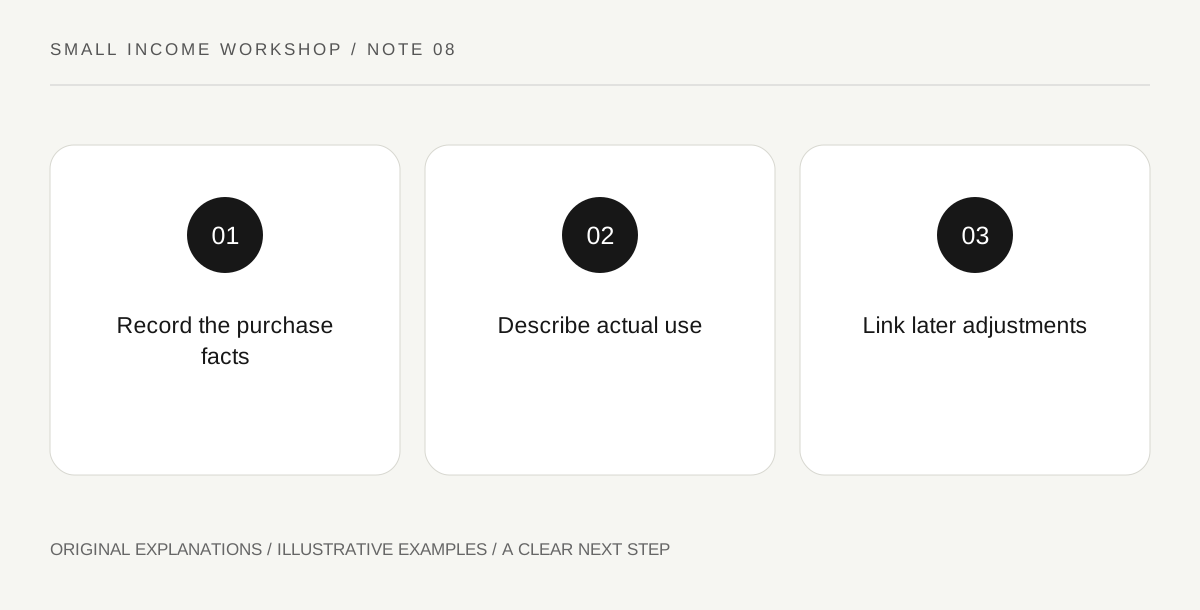
Money records3 min read
A receipt can help explain what a small work experiment cost, while its tax treatment is a separate question. Keep purpose, amount and relationship to the activity visible. The record should support accurate review without assuming that every purchase made during a side project automatically qualifies for a deduction.
Read the guide ↗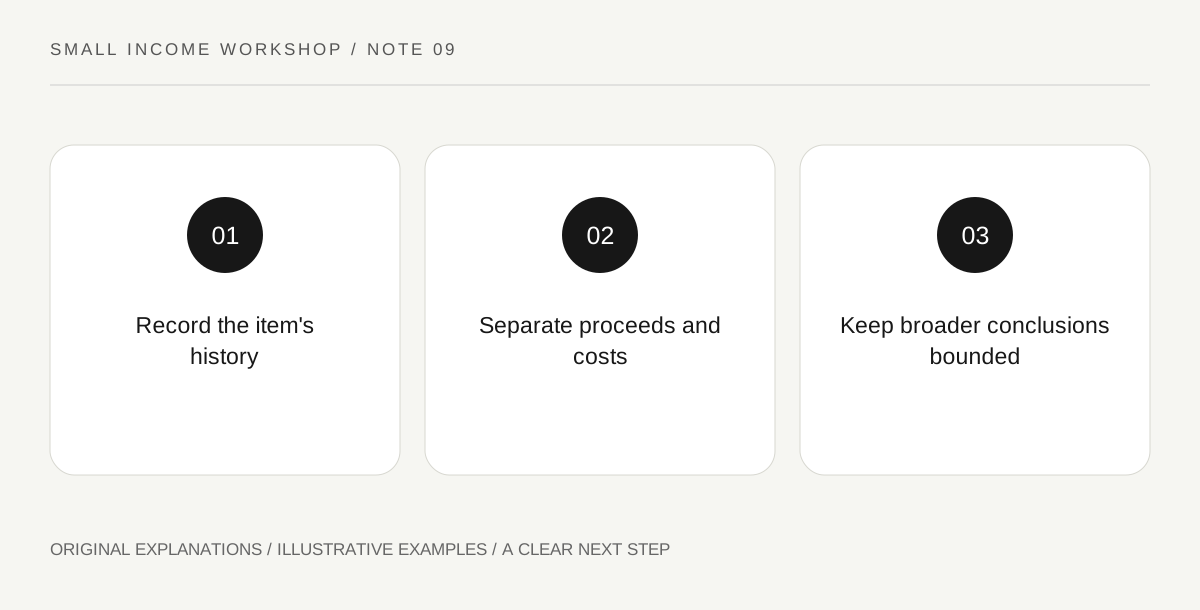
Money records3 min read
Clearing unused belongings can bring money into an account without demonstrating a repeatable online business. Keep the item's original context, sale proceeds and selling costs visible. US tax treatment also distinguishes circumstances that require actual records, so avoid treating every marketplace deposit as the same kind of income.
Read the guide ↗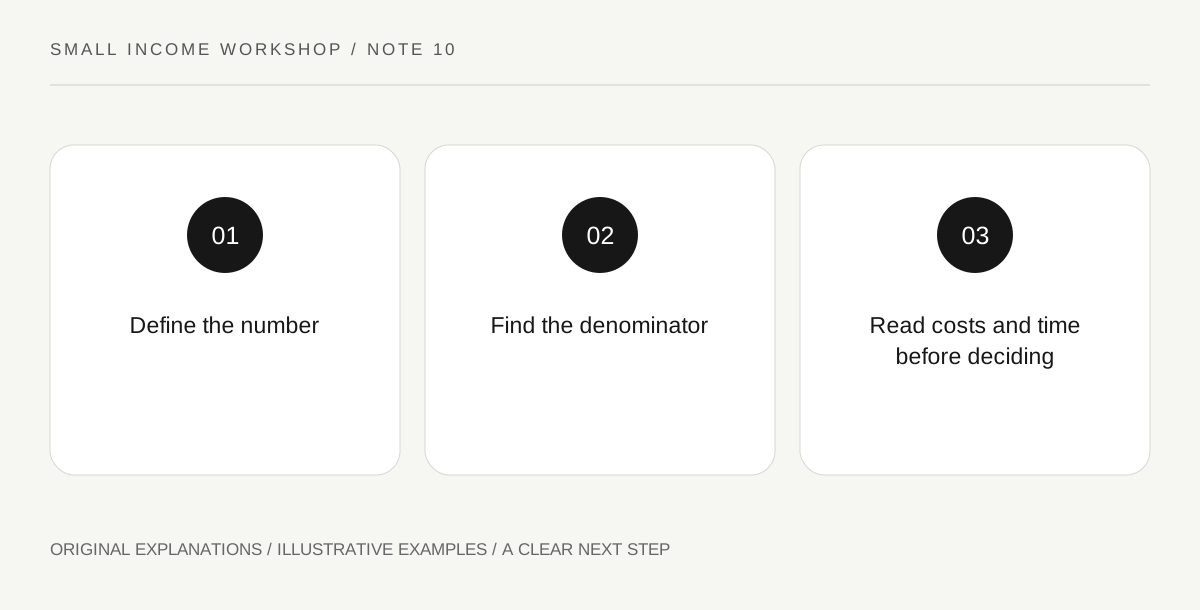
Opportunity reading3 min read
A large number can be real yet still fail to explain what an ordinary participant is likely to earn. Ask about the people, time and costs behind an online-income claim. The goal is to assess the evidence without accusing someone of fabrication solely because a promotional screenshot is incomplete.
Read the guide ↗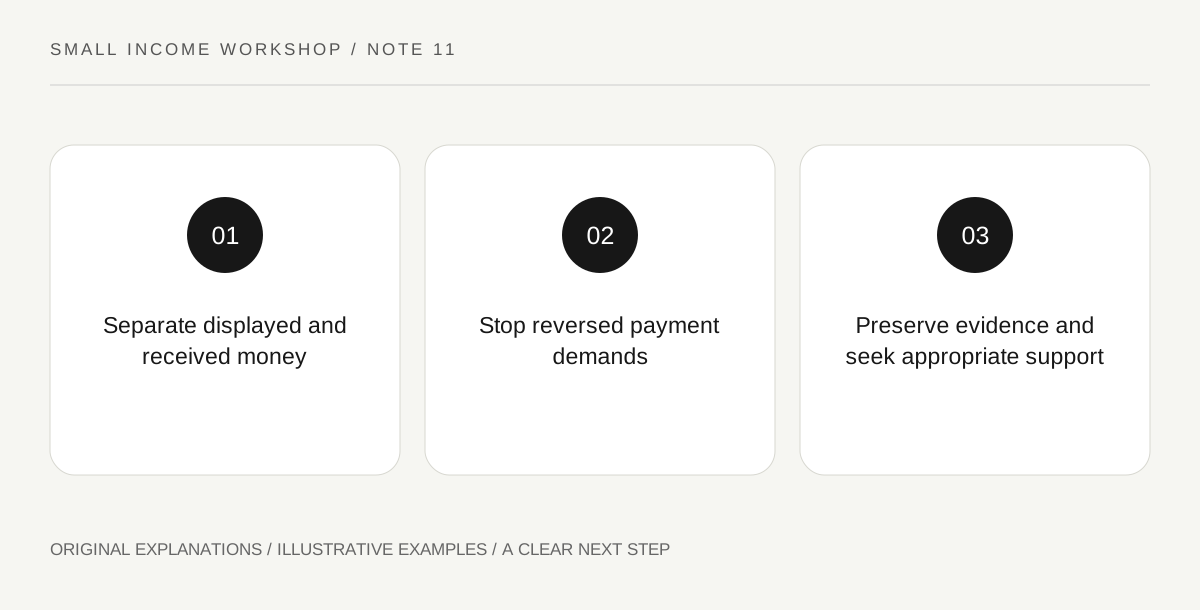
Opportunity reading3 min read
A gamified task site can display increasing earnings while asking for your own money to unlock the next stage. Treat the displayed balance and actual payment as separate things. Recognizing that structure early is more useful than trying to win back a growing imaginary amount through another deposit.
Read the guide ↗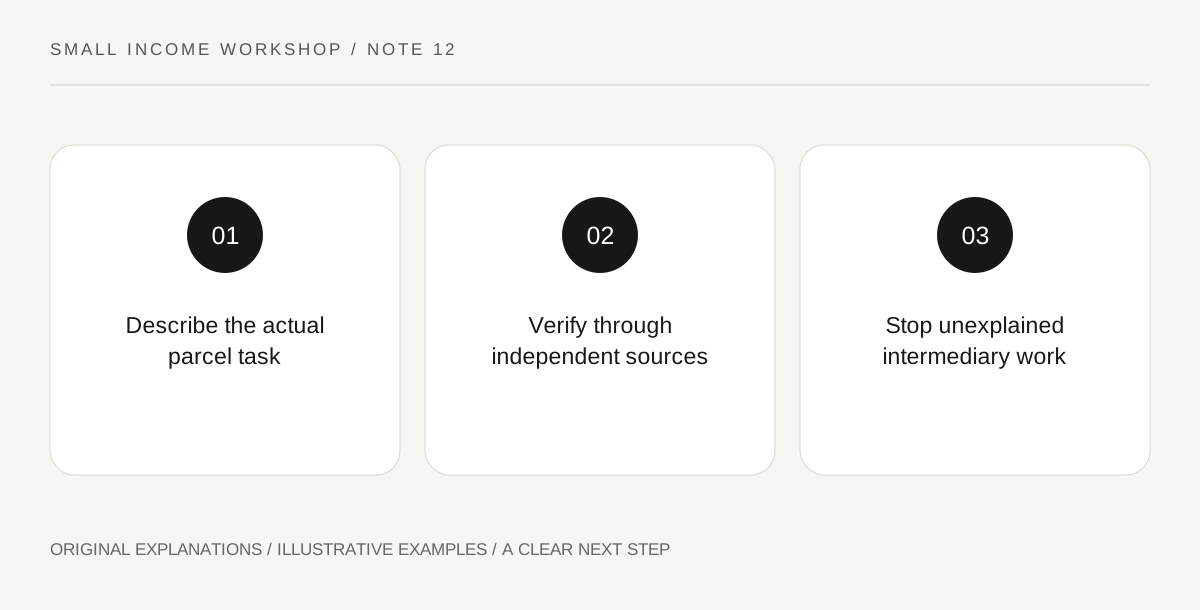
Opportunity reading3 min read
A job advertisement may describe handling parcels as simple home-based administration while leaving the source of goods and responsibility unclear. Read the actual actions requested. FTC job-scam guidance identifies reshipping arrangements as a serious warning pattern, so do not let a convenient remote-work label hide the task itself.
Read the guide ↗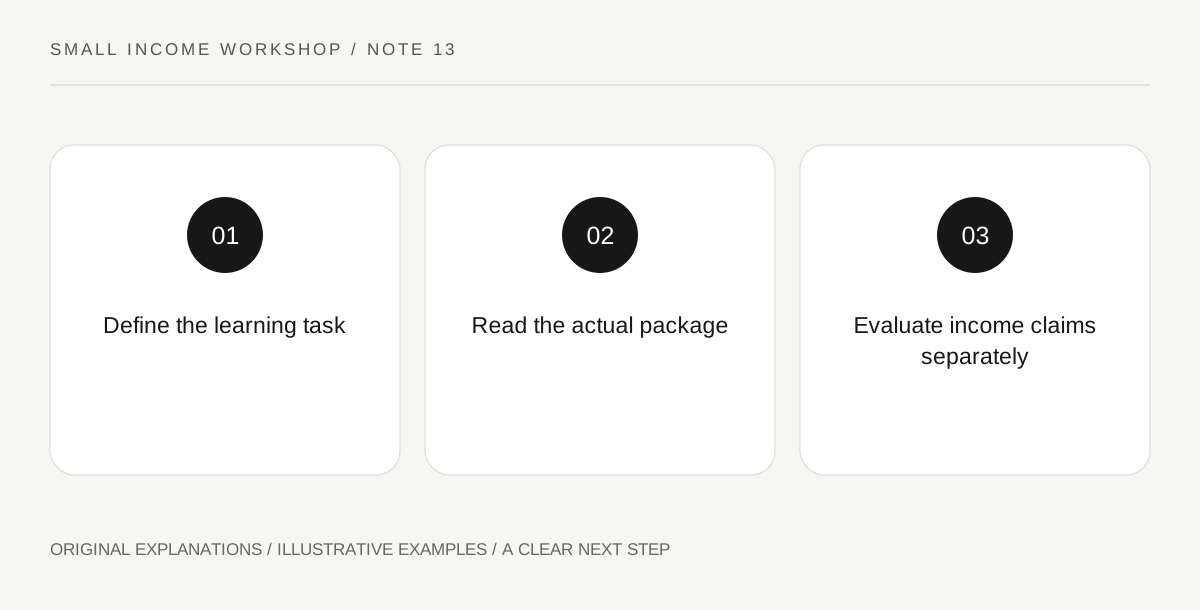
Opportunity reading3 min read
A side-income course can combine useful instruction with promotional claims about what buyers will earn. Evaluate those separately. A clear curriculum, suitable level and realistic practice task are more concrete than a screenshot of someone else's revenue, and no purchase is required when the teaching offer remains unclear.
Read the guide ↗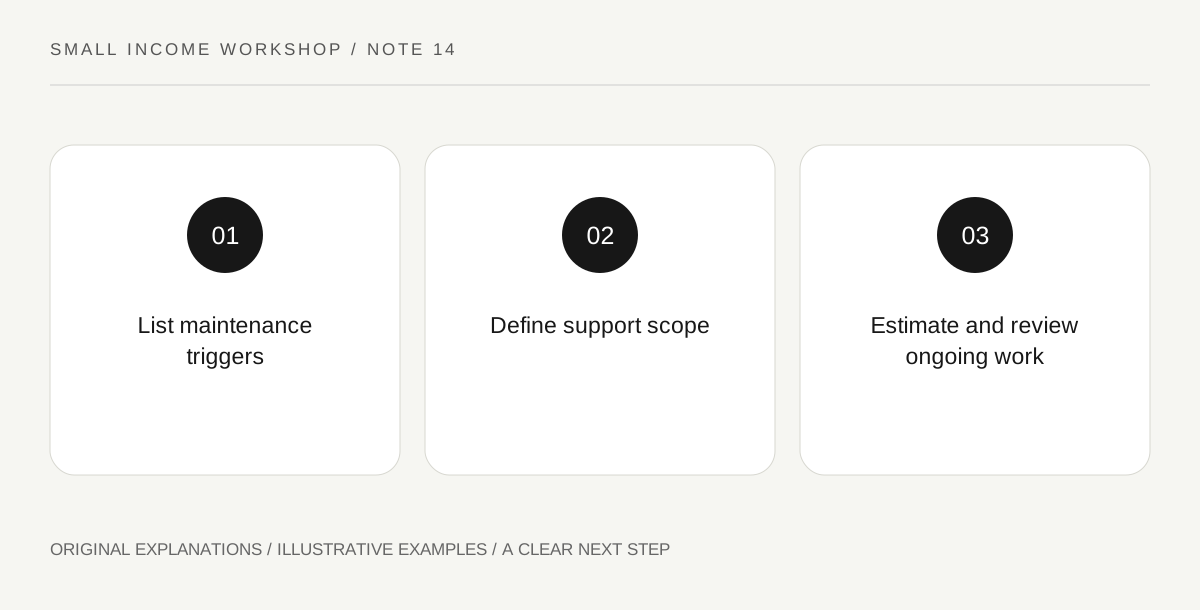
Work experiments3 min read
A downloadable product can be delivered automatically while still requiring corrections, compatibility updates and customer support. Estimate that work before calling the activity passive. Use a modest scenario tied to an actual product idea, with no assumption that a finished file guarantees sales or eliminates ongoing responsibility.
Read the guide ↗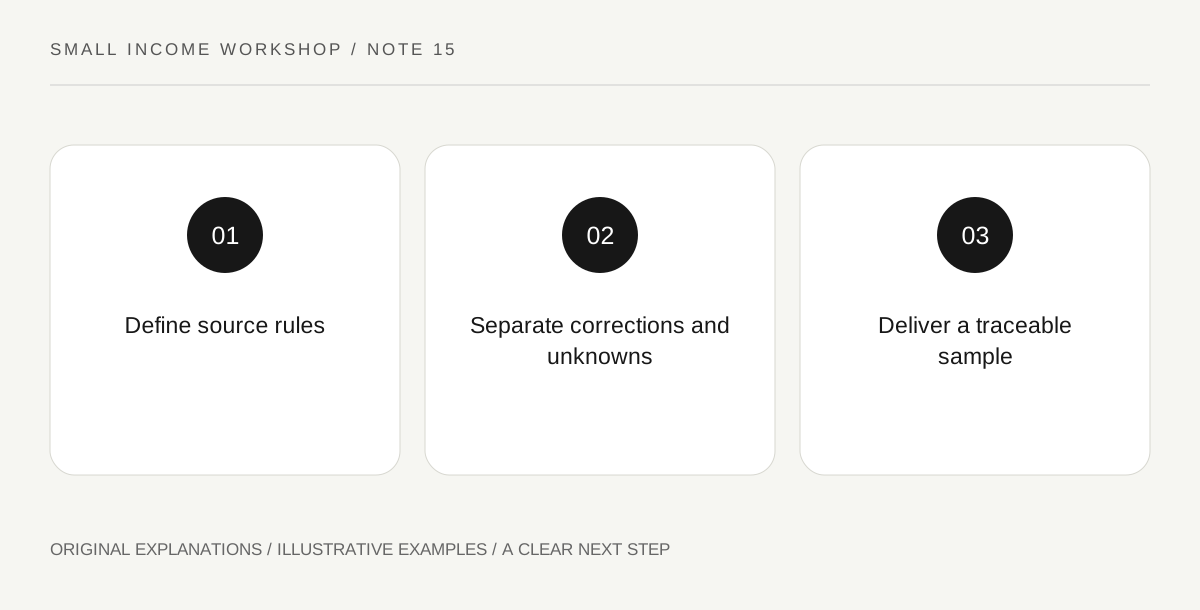
Work experiments3 min read
Cleaning a small product catalog can be a bounded service experiment when the source rules are clear. Use a sample that exposes uncertainty instead of silently guessing missing facts. The useful output includes corrected entries, traceable changes and an exception list for questions the source cannot answer.
Read the guide ↗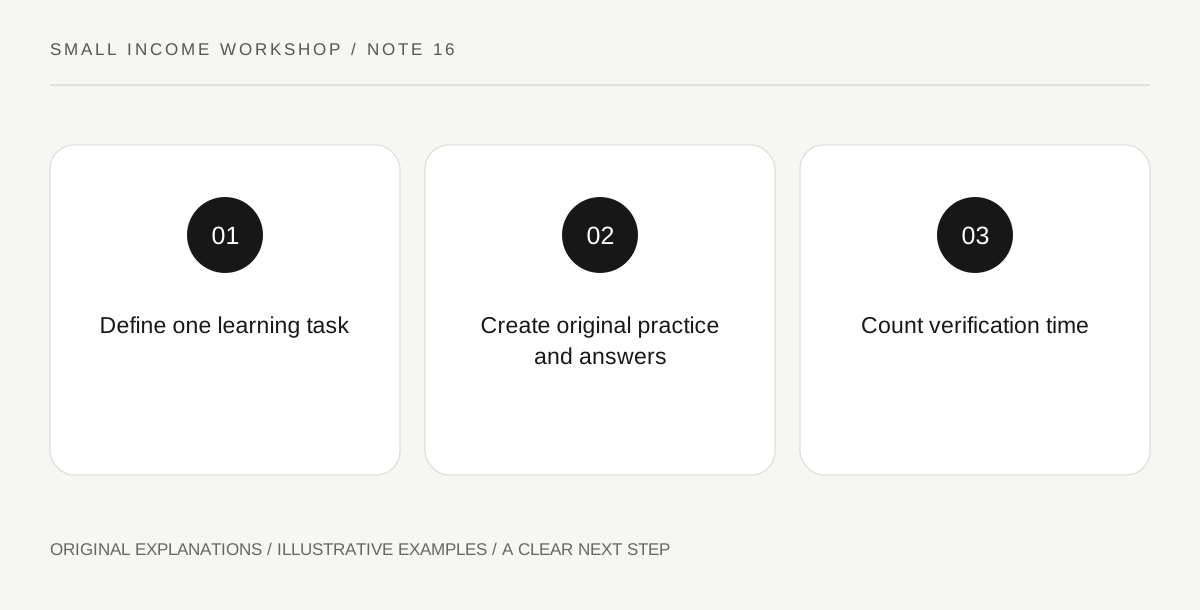
Work experiments3 min read
Creating a small practice worksheet can demonstrate an educational-material service without promising tutoring outcomes or doing someone's assessed work. Define the learner, task and answer support clearly. A useful sample shows how the material is meant to be used and what its creator is qualified to explain.
Read the guide ↗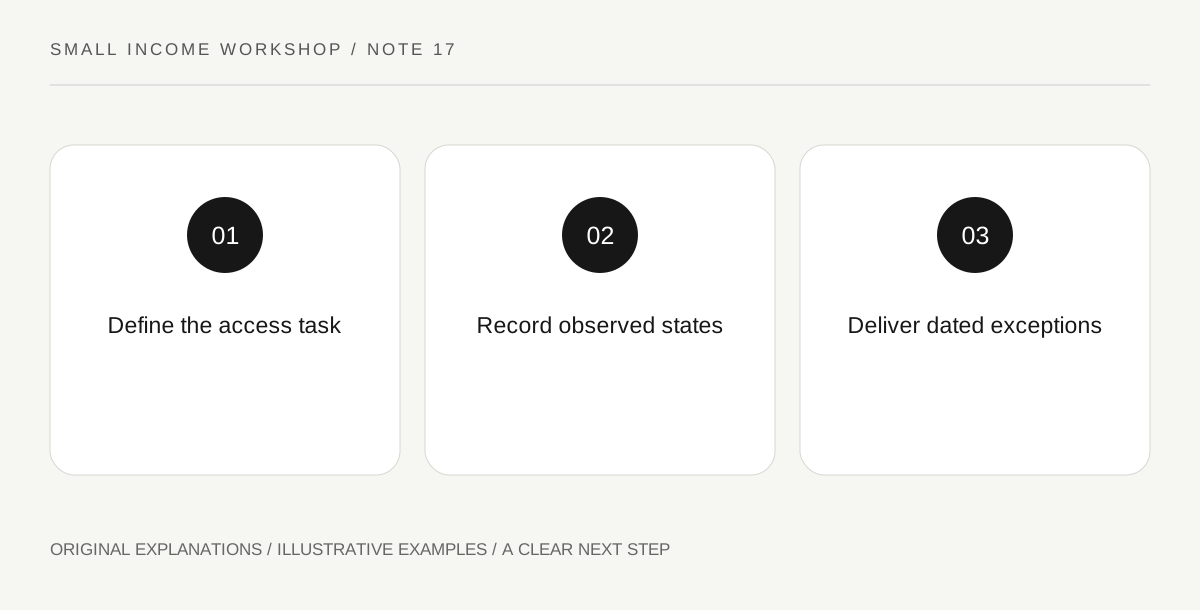
Work experiments3 min read
A small link-checking project can help maintain a public resource list, but opening a page does not prove its advice is accurate or suitable. Define the service as a bounded access and identity review. Report what was checked, when and which questions require the source owner's judgment.
Read the guide ↗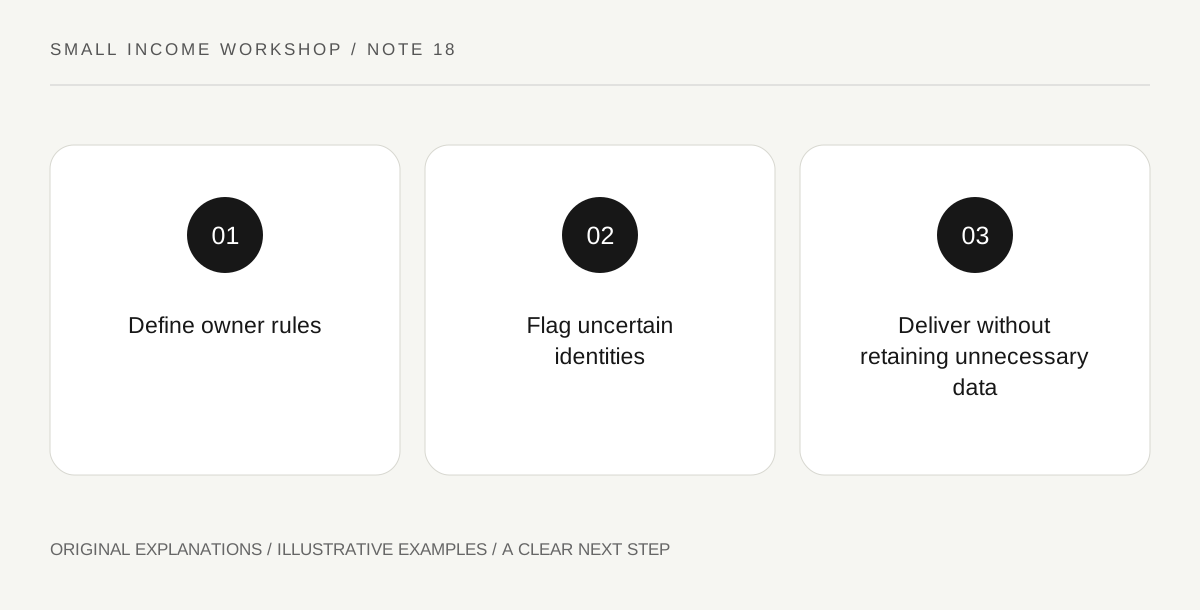
Work experiments3 min read
A registration list can contain duplicate-looking names, inconsistent fields and private information. A small cleanup service needs clear owner rules before changing it. The aim is a traceable usable list that preserves attendees' choices, rather than a superficially tidy table produced by guessing who should be merged or removed.
Read the guide ↗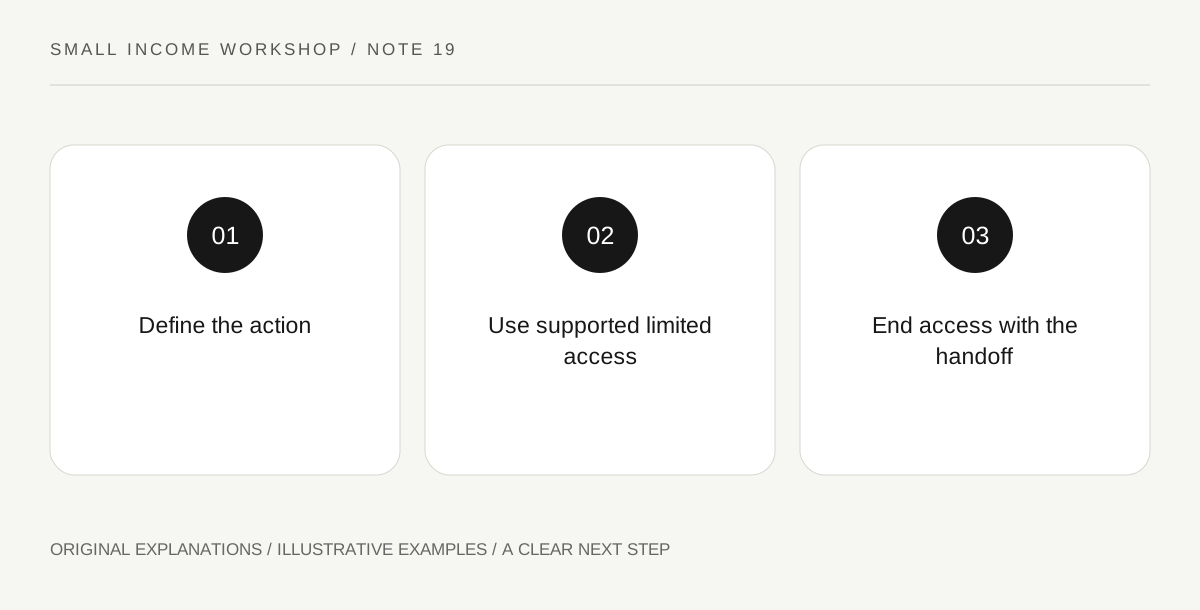
Work experiments3 min read
A client can request a simple update while granting far more account access than the task needs. Agree on an appropriate supported route before beginning. Small project size does not remove the need to protect credentials, limit permissions and end access clearly when the authorized work is finished.
Read the guide ↗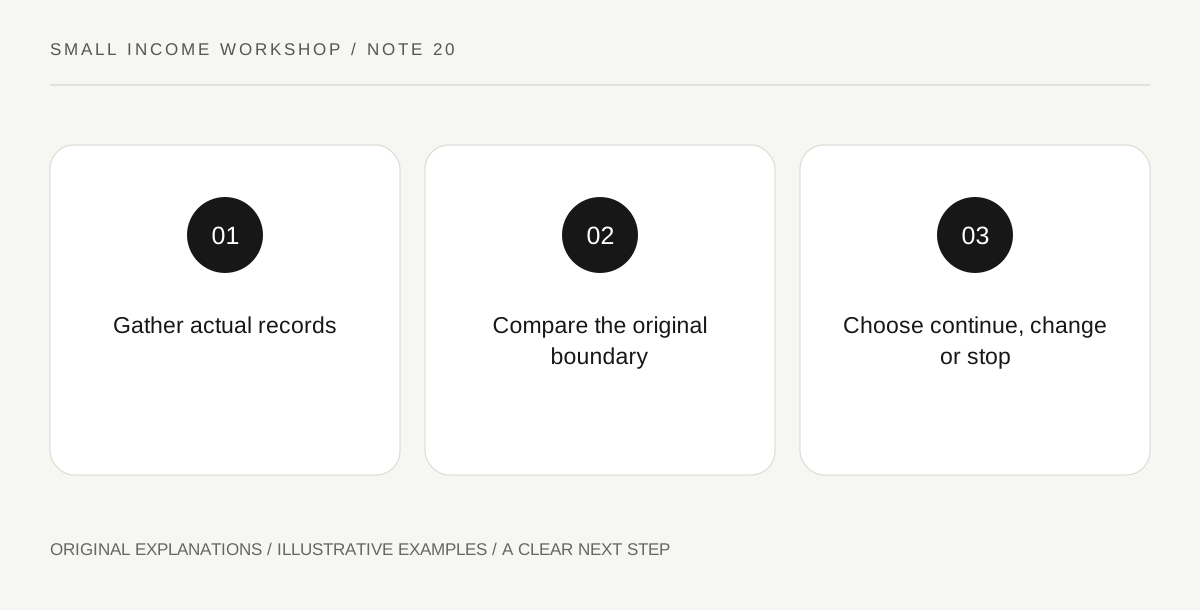
Time and capacity3 min read
A side activity can consume more time and attention than its small income justifies. Review actual effort, costs and personal fit before accepting another round. The purpose is an honest decision about the activity, with continuing, changing the experiment and stopping all available outcomes.
Read the guide ↗