No payment form is different from no income record
A small online-work activity can create income questions even when no tax information form appears in the account. Keep the underlying transaction records first and use the relevant current authority's guidance. This note explains that distinction with US resources, without supplying a universal filing threshold or individualized tax instruction.
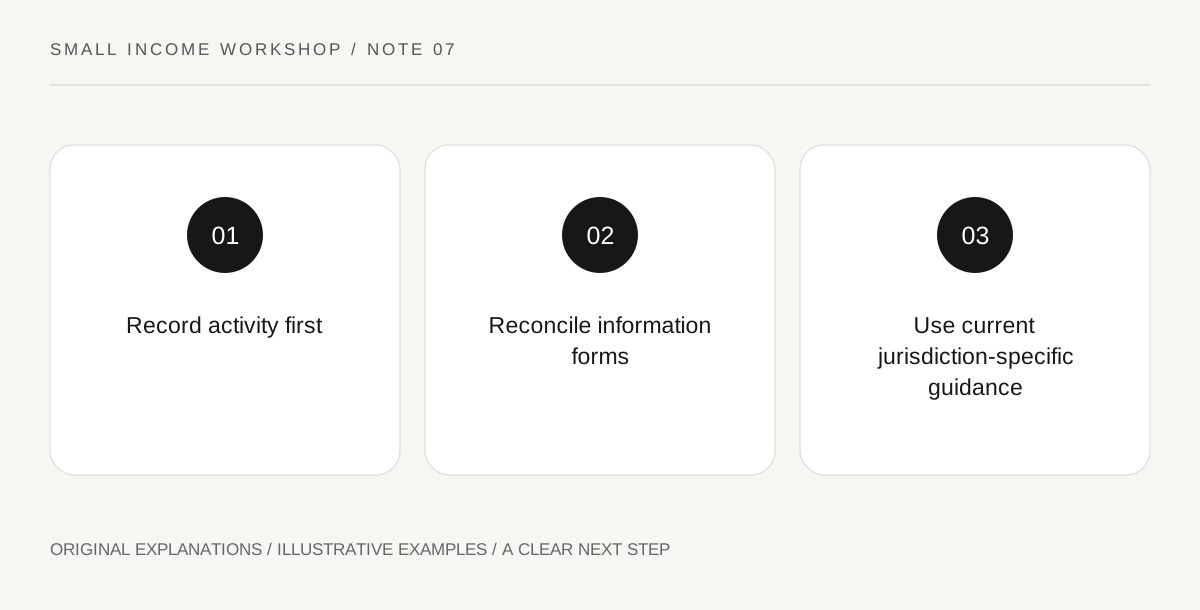
Original explanatory diagram. Read the full method and limitations below.
Start with the actual activity
Record the work, payer, amount, date and payment route using reliable documents. A platform summary, direct customer payment and cash receipt can all require different supporting records. Do not wait for a form before reconstructing the activity from memory. The IRS states that gig income can require reporting even without a payment information form. That narrow US fact is distinct from the complete set of forms, deductions and filing requirements applicable to any particular person.
Treat an information form as another record source
When a form arrives, compare it with your own records rather than automatically adding its total to all previously recorded payments. The same transaction may already be present. Keep differences visible and read the authority's current correction guidance where relevant. Do not alter official documents yourself to force agreement or ignore a mismatch because the amount seems small. A clear transaction map makes a conversation with a qualified adviser more efficient.
Keep jurisdiction and tax year explicit
US IRS pages do not establish the rules in another country. Even within one jurisdiction, forms and thresholds can change by year and circumstance. Identify the tax year and relevant location before relying on an online explanation. This article deliberately provides no numerical reporting threshold or filing-line instruction. Use the current official material and appropriate advice, particularly where cross-border work, benefits, student status or another complicating factor affects the situation.
Prepare questions from the records
Bring specific unresolved items to a qualified tax professional or the appropriate authority's support resources. A useful question names the payment and uncertainty rather than asking whether a whole side hustle is tax-free. Preserve receipts and statements in a private organized location. Do not publish personal tax forms to obtain informal opinions. The goal is an accurate information foundation, with the final tax decision made through the relevant current rules and circumstances.
Illustrative worked example
Illustrative scenario: a learner completes several small projects but receives no platform information form. They still retain the payment records and consult the relevant current guidance. Later, a form from one payment route appears and is matched to transactions already recorded, preventing double counting. No threshold, filing result or personal tax liability is invented in the example.
Questions that come up
Does no form automatically mean no reporting question?
No. The IRS specifically warns that gig income can require reporting without an information form. Apply the relevant current guidance to the actual circumstances.
Should I post my form publicly for help?
Keep sensitive information private. Use an appropriate verified professional or authority route and share only the necessary records through a suitable channel.
References and scope
These sources support the factual background. Examples and exercises are original illustrative teaching material. References do not imply endorsement.
- IRS: Gig Economy Tax Center — US gig income can require reporting even without a payment form; keep records and use current relevant guidance.
- IRS: What to Do with Form 1099-K — Payment reporting, personal-item sales and correction questions need actual records and current US guidance.