Compare platform fees by the transaction they apply to
Two platforms can advertise different fee percentages while charging for different actions. Read the base, timing and additional charges before comparing them. Use the same clearly labeled transaction scenario so a small-looking percentage does not hide a different total or an ongoing commitment.
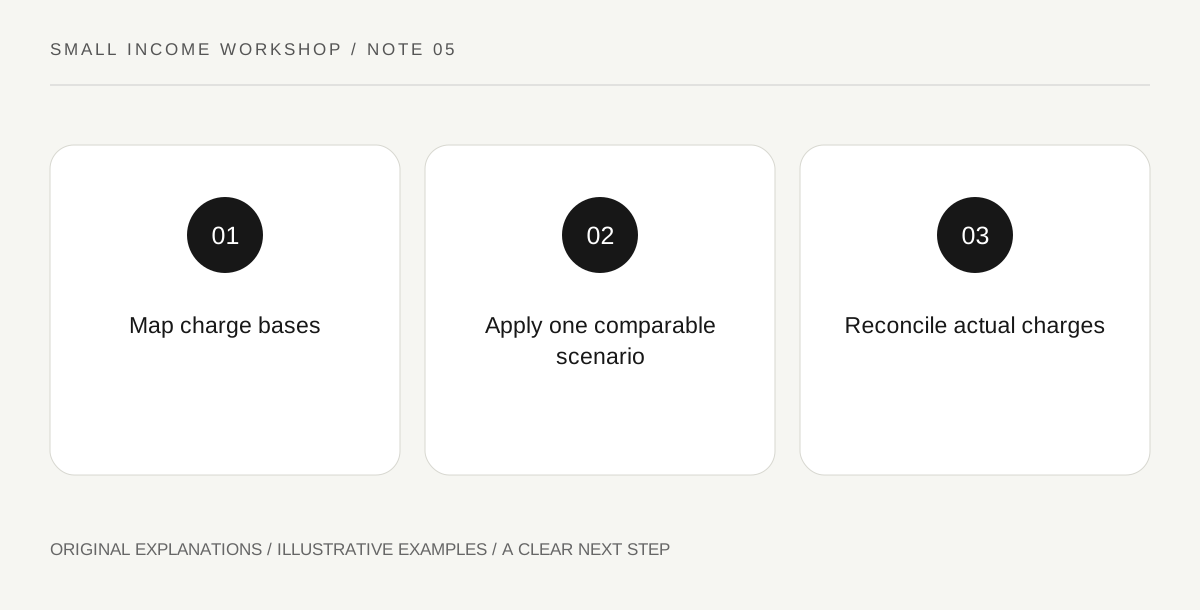
Original explanatory diagram. Read the full method and limitations below.
Identify what each charge applies to
Read whether a fee concerns listing, sale value, payment processing, withdrawal, currency conversion or another stated service. A percentage without its base is incomplete information. Copy the current terms and date rather than relying on a promotional video's old number. Do not assume a platform with no listing fee has no costs at later stages. The relevant comparison follows the actual transaction and planned use, with unavailable information left unresolved.
Use the same hypothetical sale
Choose a fictional amount and the same service scenario for both candidates. Keep currency, package and payment route consistent. Add each applicable charge according to the stated method, labeling the example rather than presenting it as a live quote. A fee charged per transaction behaves differently from a percentage, while a recurring plan has its own time horizon. Avoid a complex model whose precision depends on guessed future sales or invented exchange rates.
Keep the platform service in the comparison
Fees can accompany different tools, support routes and audience access. Read what is actually offered without assuming it guarantees demand. A platform's existence does not supply customers, and a high fee does not independently prove better service. Consider whether the available workflow fits the work you can deliver. Do not join several paid plans simply to feel diversified when the experiment has not established a real use for them.
Reconcile the first actual transaction
After a chosen transaction, compare the statement with the scenario and identify any difference. Keep the actual records for tax and management purposes using appropriate guidance. A single payout should not become a public earnings claim about what everyone can expect. If the fee structure changes materially, update the comparison before making another commitment. The useful outcome is an understandable cost map, not a permanent ranking of platforms that ignores current terms and personal circumstances.
Illustrative worked example
Illustrative arithmetic: a fictional 50-unit transaction faces a 5-unit charge under one example structure and a 3-unit charge plus a 3-unit fixed fee under another. The totals are 5 and 6, despite the second headline percentage looking smaller. Other relevant charges and service differences would need separate information. The numbers illustrate fee bases, not actual platform prices.
Questions that come up
Does the lowest advertised percentage prove the cheapest route?
No. Fixed charges, additional stages and recurring commitments can change the complete cost. Read the applicable current terms.
Can a platform fee tell me how much work I will get?
It does not establish demand. Audience access and actual customer response need separate evidence, without guaranteed-income claims. Also check whether the fee depends on a promotional membership that later renews at another price.
References and scope
These sources support the factual background. Examples and exercises are original illustrative teaching material. References do not imply endorsement.
- SBA: Plan Your Business — Startup-cost, market-research and simple break-even planning concepts; no demand or earnings guarantee.
- IRS: Gig Economy Tax Center — US gig income can require reporting even without a payment form; keep records and use current relevant guidance.
- FTC: Earnings Claims and Labor Task Force — Unusually successful examples do not establish likely earnings for everyone; claims need relevant support.